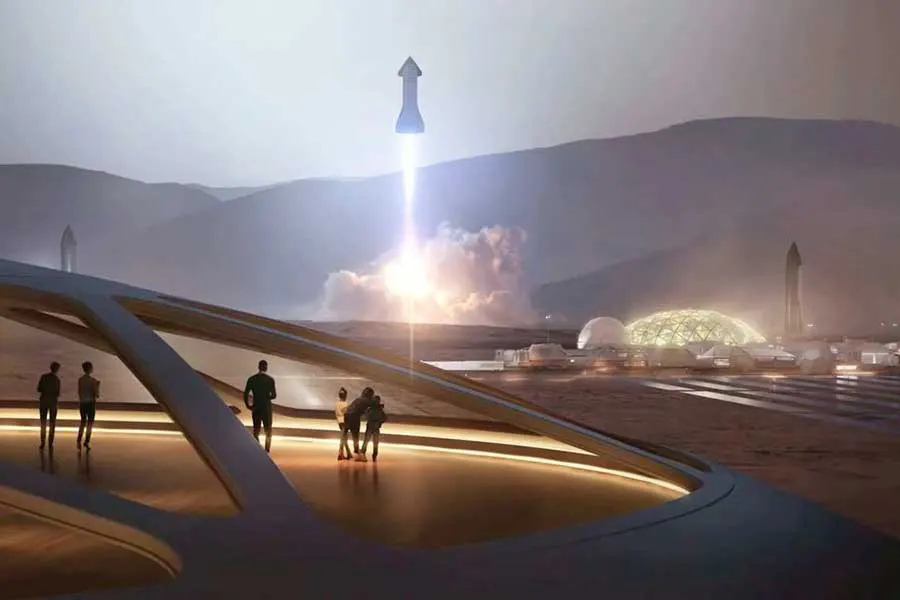
The lure of the stars has tantalized humanity since the dawn of our existence. We’ve looked up to the skies with wonder, trying to unravel the secrets they hold. Of all the celestial bodies, Mars – the shimmering Red Planet – has held a particular fascination. The possibility of making this celestial body our second home has sparked the imaginations of scientists, writers, and dreamers alike. With the advent of SpaceX’s ambitious projects, spearheaded by visionary Elon Musk, the goal of not just reaching but also colonizing Mars is now within our sights. Let’s delve into the SpaceX Mars mission timeline and discover what the Red Planet offers to us.
Why Mars?
Mars, often touted as Earth’s “sibling planet,” has been the center of attention for several reasons:
- Potential for Life: Past research suggests that Mars once had liquid water on its surface. This hints at the possibility that some form of life might have existed or may still exist in some form.
- Resources: Mars is rich in essential resources like iron, titanium, nickel, and even precious metals. These could be instrumental in the sustenance and growth of Martian colonies.
- Feasibility: Among all the planets in our solar system, Mars offers the most feasible conditions for human settlement, given its relative proximity and some of its Earth-like features.
SpaceX Mars mission timeline: a brief overview
Elon Musk’s SpaceX has been at the forefront of the Martian exploration journey. Let’s trace the milestones and future plans in their expedition:
- 2016 – Mars Plans Unveiled: In a groundbreaking announcement, Elon Musk presented his plans to colonize Mars. He detailed the spacecraft design and the broader vision behind the interplanetary mission.
- 2018 – The Falcon Heavy Launch: The most powerful operational rocket in the world, Falcon Heavy, was launched successfully. This was a testament to SpaceX’s capabilities and marked a step closer to the Mars dream.
- 2020 – Starship Prototypes: Throughout the year, SpaceX tested multiple Starship prototypes. These spacecraft are designed to be fully reusable space vehicles that could eventually ferry humans to Mars.
- 2022: As per the last update, the latest details involved planned uncrewed missions to Mars to deliver cargo and test landing mechanisms. This was a precursor to the manned missions scheduled for the latter half of this decade.
- 2024 and Beyond: If all goes as planned, SpaceX aims to land the first crewed mission on Mars within this timeframe. Subsequent missions would then work on building a self-sustaining colony.
What does this mean for Humanity?
The ramifications of a successful Mars colonization are profound:
- Backup Plan for Earth: Given the increasing concerns of climate change, nuclear warfare, and other existential threats, having a secondary home ensures the survival of human civilization.
- Scientific Advancements: Living on Mars would necessitate breakthroughs in various fields – from space travel and medicine to agriculture and energy generation. These advancements could then be harnessed for the betterment of life on Earth.
- Economic Opportunities: The colonization of Mars could give birth to an entirely new space-based economy. Think about the economic boom during the age of exploration in the 15th and 16th centuries – only this time, it would be on an interplanetary scale.
- Expansion of Human Perspective: By becoming a multi-planetary species, we would inevitably expand our understanding of the universe and our place in it. Our approach to diplomacy, cooperation, and existence itself could undergo a seismic shift.
In conclusion, the SpaceX Mars mission timeline isn’t just a series of dates and milestones. It represents the audacity of human dreams, the indomitable spirit of exploration, and the belief in a brighter, boundless future. As we stand on the cusp of this new era, we’re not just looking at the colonization of a planet; we’re witnessing the evolution of humanity itself. The Red Planet awaits, and so does a new chapter in our cosmic story.